
Ultimate List : Natural Glowing Skin for Women | Makeup Guide
Achieving naturally glowing, radiant skin is a holistic process that combines a consistent skincare routine, healthy lifestyle habits, and clever makeup tricks. By nurturing your skin from within and highlighting your features on the outside, you can enjoy a lit-from-within complexion at any age. Whether you battle dullness, dry patches, uneven tone, or early fine lines (common for women in their late 20s, 30s and 40s), these glowing skin tips for women will help. We’ll cover a gentle yet effective natural skincare regimen, powerful ingredients and home remedies, and makeup techniques and products that enhance your natural glow.
Natural Skincare Routine for Glowing Skin
A simple daily routine sets the foundation for luminous skin. Begin by thoroughly cleansing morning and night to remove dirt, oil, and pollutants. This “canvas-clearing” step prevents clogged pores and dullness. Use a gentle, natural-based face wash (Beauty Lab recommends Fresh Soy Face Cleanser) and massage it into skin in circular motions. For example, the GoodHousekeeping Beauty Lab calls Fresh Soy Face Cleanser a top radiance-boosting wash.
Next, exfoliate 1–3 times per week to slough off dead skin cells. Exfoliation is key to brightness: removing that dull outer layer leaves skin smoother, clearer, and better able to reflect light. You can use a gentle scrub (like Acure Brightening Facial Scrub) or a mild chemical peel with alpha-hydroxy acids (GH Beauty Lab also liked Philosophy’s triple-acid peel). In practice, a few times a week tilt towards chemical exfoliants (glycolic or lactic acid) if your skin tolerates it, or a soft physical scrub. Both methods “remove the skin’s outer layer of dead cells so its surface is smoother and clearer and reflects light”, giving an immediate glow.
After exfoliation:
it’s crucial to hydrate and nourish the skin. Apply a hydrating serum or moisturizer to plump skin and reinforce the barrier. When skin is well-moisturized, it literally reflects more light and “instantly appears more glowing”. Look for moisturizers rich in hyaluronic acid, glycerin, and ceramides. (In fact, dermatologist-developed brands like CeraVe are formulated with “three essential ceramides, niacinamide, and hyaluronic acid” to help dry skin hold moisture.) Beauty editors love rich creams with anti-aging ingredients: for example, iNNBeauty Project Extreme Cream (with retinol, peptides, and ceramides) delivers deep hydration and an instant glow. For daytime, choose a non-greasy gel or fluid like Neutrogena Hydro Boost Water Gel (hyaluronic acid–based) which hydrating without heaviness.
Finally, always finish with SPF. Sunscreen protects skin from UV damage that causes dullness, dark spots, and premature aging. As GoodHousekeeping warns, after exfoliation the skin is more sensitive to sun, so apply a broad-spectrum SPF 30 or higher daily. A moisturizing sunscreen is ideal: for example, EltaMD UV Daily SPF 40 (which contains hyaluronic acid) goes on smoothly, “leaving skin feeling very smooth” without a greasy feel. For a built-in glow, tinted SPF creams like L’Oreal Revitalift Bright Reveal SPF 30 (with glycolic acid and vitamin C) not only protect but also gently brighten the complexion.
Quick Tips: Use lukewarm water (hot water can strip moisture). Pat skin dry gently. If needed, layer a face oil or rich night cream for extra moisture (rosehip oil, squalane, or kokum butter are great natural hydrators). Don’t forget lightweight eye cream on fine lines and dark circles under eyes.
Powerhouse Ingredients for a Radiant Complexion
To combat common concerns (dullness, uneven tone, dryness, fine lines), target the right ingredients in your skincare products:
Vitamin C:
A top brightener and antioxidant. Vitamin C serums fade dark spots, boost radiance, and stimulate collagen. For example, SkinCeuticals C E Ferulic is “widely considered the gold standard” of vitamin C serums; testers saw softer, smoother, brighter skin after 6 weeks. Even budget picks like TruSkin Vitamin C Serum can “boost radiance and visibly reduce dark spots”. Use a stable L-ascorbic acid serum in the morning (under SPF) to protect from pollution and sun damage.
Retinol/Retinoids:
The most studied anti-aging ingredient. Topical retinoids (vitamin A derivatives) increase collagen, reducing fine lines and wrinkles. Harvard Health notes they also fade age spots and smooth rough patches. Use retinol or adapalene at night (start slowly, every other night) to build tolerance. Always pair retinoids with hydration (they can dry skin) and diligent daytime SPF.
Hyaluronic Acid & Moisture-Binders:
Hyaluronic acid, glycerin, and honey-derived humectants draw and lock in water. Products containing these (e.g. CeraVe, Kosé Sekkisei, or a rosewater toner) keep skin plump. As one beauty writer found, a hyaluronic gel like Neutrogena Hydro Boost was “extremely lightweight, absorbs quickly” yet left her skin dewy and non-greasy.
Niacinamide (Vitamin B3):
A multi-tasker for even tone and elasticity. Niacinamide calms inflammation, refines pores, and can help lighten discoloration. For instance, ILIA Super Serum Skin Tint uses niacinamide along with hyaluronic acid and squalane to hydrate, plump, and minimize pores.
Alpha Hydroxy Acids (AHA) & Enzymes:
Gentle chemical exfoliants like glycolic or lactic acid renew skin each night. Lactic acid in yogurt or toners can boost moisture, exfoliate dead cells and soften lines. (Yogurt masks, for example, are rich in lactic acid and nutrients that smooth skin, brighten tone, and reduce fine lines.) Use AHA/BHA peels weekly if your skin tolerates it, to fade dullness and encourage cell turnover.
Antioxidants & Botanical Extracts:
Beyond vitamins, incorporate green tea, niacinamide, peptides, and superfood extracts. Matcha green tea or pomegranate extract serums fight free radicals and even out tone. Peptides in serums or creams (like copper peptides) help firm and smooth texture. Even adding a vitamin E–rich oil (rosehip, argan) can nourish dry, aging skin.
Ceramides & Barrier Repair:
Strengthen the skin barrier to retain glow. Barrier-repair ingredients like ceramides, cholesterol, and fatty acids prevent moisture loss and flaking. Ceramide-rich creams (e.g. CeraVe, Dr. Jart+ Ceramidin) keep skin supple and radiant.
Home Remedies & Diet Tips for a Natural Glow
Healthy skin starts from within. A skin-friendly diet and simple home treatments can amplify your glow:
Stay Hydrated: Drink plenty of water. Hydration flushes toxins and keeps skin supple. (ISDIN reminds us that water is essential “for natural glow” – aim for about 2–3 liters daily.) Herbal teas (green tea, rooibos) add antioxidants too.
Eat the Rainbow: Fill half your plate with colorful fruits and vegetables. The vitamins and antioxidants in berries, citrus, leafy greens, and bell peppers fight oxidative stress and brighten skin tone. In particular, vitamin C–rich foods (kale, kiwi, citrus) support collagen, while beta-carotene foods (sweet potato, carrots) give a subtle healthy radiance.
Healthy Fats: Include omega-3 sources (salmon, flaxseed, walnuts) and monounsaturated fats (avocado, olive oil) to nourish the skin barrier. Healthy fats help skin stay plump and moist, reducing fine lines. Omega-3 also combats inflammation that can dull skin or worsen blemishes.
Limit Sugar and Processed Foods: High sugar intake and refined carbs can spike inflammation and glycate collagen, leading to dullness and sagging. ISDIN advises cutting excess sugar for clearer, fresher skin.
Good Sleep & Low Stress: Sleep is beauty rest for a reason. Poor sleep and chronic stress cause under-eye circles, sallow tone, and breakouts. Aim for 7–8 hours nightly. Try stress-relievers like meditation or yoga, which improve circulation and skin renewal. (As GH notes, stress and lack of sleep literally “rob your complexion of its radiance”.)
Easy DIY Masks
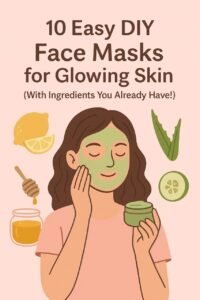
Turmeric + Honey Mask: Turmeric’s curcumin is anti-inflammatory and antioxidant. Mix ¼ tsp turmeric powder with 1 tsp honey and a splash of yogurt or milk to form a paste. Honey is a natural humectant and has mild antibacterial properties. This mask may calm redness and impart a gentle glow (rinse off after 10–15 minutes). Always patch-test first.
Yogurt Mask: Plain Greek yogurt contains lactic acid to gently exfoliate and moisturize. Slather 1–2 tbsp on face for 10 minutes, then rinse. It can brighten skin tone, ease minor sunburn, and leave skin feeling supple. You can mix in honey or oats for extra soothing.
Aloe Vera Gel: Pure aloe calms irritation and hydrates. After cleansing, apply a thin layer of aloe gel from the plant or store-bought (look for “aloe vera” high on the ingredients). It’s cooling, and as health sources note, it helps absorb quickly and may aid hydration even for oily skin.
Avocado & Oat Mask: Mash half an avocado (rich in vitamins E and healthy fats) with 1 tbsp oatmeal. Leave on 15–20 min. Avocado deeply moisturizes dry patches, while oats soothe and mildly exfoliate.
Makeup Tips for Radiant Skin
With the right makeup techniques and products, you can enhance your natural glow. Makeup should highlight your skin’s radiance without hiding it. Use these makeup-for-radiant-skin ideas:
1. Start with Primer
Applying an illuminating or hydrating primer sets a dewy base. A glow primer blurs pores and gives a subtle sheen. For example, Beauty Pie’s Wonderfilter Brightening Primer “works to both blur the skin and add a natural glow”. Rare Beauty’s Always An Optimist Illuminating Primer “practically melts into the skin and creates such a smooth base” with a subtle, natural-looking radiance. These primers extend makeup wear and provide an inner lit-from-within effect.
Example: An illuminating primer preps skin for a radiant base.
2. Build a Luminous Base
Choose lightweight, dewy foundation or tinted moisturizer formulas (“glow” or “radiant” finish). Rather than heavy matte, opt for medium-buildable coverage that lets skin show through. Good picks include:
Armani Luminous Silk Foundation (Natural Glow version): A luxury favorite that instantly blurs texture and delivers a lit-from-within glow. It smooths imperfections while making skin look naturally radiant over time.
NARS Light Reflecting Advanced Skincare Foundation: Packed with botanical extracts (oats, lilyturf, cacao peptides) this foundation not only covers but also nourishes – it “reduces redness, strengthens the moisture barrier, and minimizes environmental stressors” for a glowing finish.
Saie Glowy Super Skin Tint: A lighter BB-tint that adds warmth and subtle dewiness without oiliness. It’s “super hydrating and comfortable” to wear all day, giving skin an even glow.
ILIA Super Serum Skin Tint SPF40: A tinted serum with skincare benefits (niacinamide, hyaluronic acid, squalane) and mineral SPF. It gives light coverage, evens tone, and hydrates – effectively “combining makeup, skincare, and SPF into one step” for a plumper, more luminous complexion.
Charlotte Tilbury Airbrush Flawless (Dream) Radiance: For high-end glow, try CT’s Airbrush Flawless Foundation or Magic Away Liquid. Both use light-diffusing pigments to blur pores and add radiance. (Beauty editors also rave about Chanel’s N°1 Revitalizing Foundation for a soft “lit-from-within” finish.)
Apply foundation with a damp beauty sponge or brush, blending outwards. You can even mix in a drop of liquid highlighter (like ILIA’s Halo Glow Drop) for extra glow. For spots of color, use a lightweight concealer or a glow tint (Maybelline’s Instant Age Rewind Perfector is a cult “glow serum” product – apply it as concealer/highlighter on the cheekbones and under eyes for a quick radiance boost).
3. Set Strategically
Instead of matte powders all over, set only oily areas if needed. Use a very light dusting of translucent setting powder on T-zone to control shine, but leave cheeks dewy. For example, Maybelline Fit Me Loose Finishing Powder can mattify shine without flattening skin. A finely milled glow powder (hourglass Ambient Lighting Powder) can be lightly dusted over the entire face for a soft-focus radiance.
4. Highlight the High Points
Adding highlighter is key to that “natural glow” effect. Apply a champagne or pearl-toned highlighter to the face’s high points – where the sun would naturally hit – to accentuate bone structure. That means the tops of your cheekbones, brow bones, bridge of the nose, Cupid’s bow and inner eye corners. (Healthline and beauty pros agree: highlight “everywhere the sun would naturally hit” for a lifted look.) Use a light hand and blend well: start with a small amount on a fan or tapered brush, and build up if needed. Good choices: a liquid or cream highlighter (Charlotte Tilbury’s Hollywood Flawless Filter or Ilia Multi-Stick in “Silver Lining”) for a subtle sheen, or a finely milled powder highlighter (Becca Shimmering Skin Perfector, Maybelline Master Chrome) for a more intense glint.
(apply highlighter on cheekbones, brows, nose, Cupid’s bow, etc., to create a natural glow).
5. Blush and Bronze
A healthy flush and a hint of bronze make skin look alive. After foundation, dust a peachy or rosy blush onto the apples of your cheeks and blend upwards toward the temples. Cream blushes (Rare Beauty Soft Pinch, Glossier Cloud Paint) blend into the skin for a dewy effect. Then use a warm-toned bronzer or contour shade in the hollows of the cheeks and around the hairline. This “sun-kissed” contour adds dimension without looking harsh. Beauty pro Shawna Hudson suggests a lightweight bronzer (like Maybelline City Bronzer) to carve out the cheek hollows for a natural glow.
6. Luminous Lips & Final Touches
Keep lips fresh and light – matte lipsticks can age the look. Try a glossy balm or sheer lipstick in berry, peach, or nude. Maybelline’s Lifter Gloss (with hyaluronic acid) plumps lips for a juicy finish. For extra radiance, lightly dust a smidge of highlighter on the Cupid’s bow. Finally, spritz a dewy setting spray (Urban Decay All Nighter Dewy, e.l.f. Dewy setting mist) to meld everything together and add a final luminosity.
Addressing Common Concerns
Dull/Uneven Skin: Stay consistent with exfoliation and vitamin C. Treat dark spots with targeted serums (niacinamide or tranexamic acid) and brightening masks. In makeup, choose warm, peachy-pink tones to counteract sallowness.
Dry/Dehydrated Skin: Layer hydrating serums (hyaluronic acid) and occlusive creams at night. Try overnight masks or sleeping packs (e.g. Laneige Water Sleeping Mask). For makeup, skip mattifying primers and powders; instead, use moisturizing products and lightweight formulas.
Fine Lines/Aging: Incorporate retinoids, peptide serums, and extra moisturizing. Eyes: use a light-reflecting concealer or eye cream. In makeup, avoid overly matte or heavy foundations that “sink” into lines. Focus on hydration – a sheer tinted moisturizer can be more flattering than a full-coverage matte foundation.
Acne-Prone/Oily Skin: Keep pores clear (double cleanse and exfoliate gently). Use non-comedogenic products and gel-based moisturizers (CeraVe PM, Clinique Dramatically Different Gel). A lightweight mineral sunscreen helps. In makeup, primer and powder to control shine are fine, but maintain a bit of dew. Look for foundations labeled “non-comedogenic” and oil-free.
Product Recommendations and Tips
Cleansers: In addition to Fresh Soy, consider Cetaphil Gentle Cleansing Milk or Dr. Alkaitis cleanser (organic). Oil-cleansing (jojoba or grapeseed oil) can also lift impurities without stripping moisture.
Serums: Vitamin C: SkinCeuticals CE Ferulic (splurge) or Paula’s Choice 25% Vitamin C + Glutathione (budget); Hyaluronic: The Ordinary Hyaluronic Acid (affordable); Niacinamide: The Ordinary Niacinamide 10% + Zinc 1%.
Moisturizers: For dry skin, try CeraVe Moisturizing Cream (rich, barrier-friendly) or First Aid Beauty Ultra Repair Cream (with colloidal oatmeal). For oily/combination skin, Neutrogena Hydro Boost Gel or Belif The True Cream Aqua Bomb are cooling hydrators.
Face Masks: A weekly bio-cellulose sheet mask (like SK-II or Tonymoly) infuses the skin with nourishing essence. Clay masks (dried mud or charcoal) can clarify pores 1–2 times a week for a brighter base, but follow with a hydrating step.
Sunscreen: Besides EltaMD UV Daily, other dermatologist-recommended SPF-30 moisturizers include: La Roche-Posay Anthelios Ultra Melt (fluid finish) or ISDIN Eryfotona Actinica (mineral/antioxidants). Even tinted moisturizers with SPF (IT Cosmetics CC Cream, Supergoop CC Cream) can be part of the glowing routine.
Primers: Our round-up above includes many: Beauty Pie Wonderfilter, Rare Beauty Illuminating, Charlotte Tilbury Wonderglow (for dull skin), and Deciem’s The Ordinary High-Adherence Silicone Primer (drugstore).
Highlighters: Dries powders like Charlotte Tilbury Pillow Talk Glow (illuminator) or Tom Ford Soleil Glow give a natural glow. Cream highlighters (BECCA Shimmering Skin Perfector Liquid, NARS Illuminator in “Orgasm”) meld into skin beautifully.
Blush: Cream or gel blushes add dewy color – try Rare Beauty Soft Pinch, Maybelline Cheek Heat Gel-Cream, or Benefit Benetint. Powder blushes (Milani Luminoso peach) can work if not too matte. Always tap with fingertips for the most natural flush.
Finishing Sprays: MAC Fix+ (original or coconut variant) or e.l.f. Mist & Set Dewy Finish lock in makeup with a subtle sheen.
Conclusion
Healthy, glowing skin comes from a full-circle approach: a gentle but effective routine, targeted actives, wholesome diet and hydration, and smart makeup. Cleanse and exfoliate to remove dullness, then quench and protect with moisture and sunscreen. Power up skincare with vitamin C, hyaluronic acid, niacinamide and retinoids to brighten tone and smooth fine lines. Inside, drink water, eat antioxidant-rich foods and manage stress. On the makeup side, use illuminating primers and dewy foundations (like Armani Luminous Silk or ILIA’s Skin Tint), and highlight cheekbones, brows and lips for an inner glow.
Key takeaways: Consistency is crucial. Even a few days of skipping routine or sunscreen will dull results. Invest in at least one hero skincare product (serum or cream with proven ingredients) and one favorite glow-giving makeup product (a primer or highlighter you love). With these glow-up tips and tricks, you’ll achieve a naturally radiant complexion that looks healthy and luminous – not artificial or cakey.
Sources: Expert dermatology and beauty editor advice, recent beauty guides and product tests. Each recommended product and tip above is backed by consumer or expert reviews in these sources.